

When Luda mentioned only 17.5% of Japanese citizens hold a valid Japanese passport, I almost spat out the miso soup I was drinking. This is shockingly low and I initially didn’t believe it. For context, it is estimated that roughly 70% of Canadians hold one. Economics might explain part of the gap, but it is not likely the most significant factor in this case. Countries with a similar real GDP per capita level as Japan (a measure often used as a proxy for standard of living), such as Spain and South Korea, are estimated to have significantly higher passport ownership rates. Also, Japan’s passport is among the world’s strongest. What, then, could be the cause?
This article points to a variety of contributing factors, including a demanding work culture, limited vacation time, and societal norms. My theory is that the biggest factor is, simply, the Japanese knowing the Japan travel hype is real. Why go elsewhere elsewhere when the country you live in already satisfies your travel needs? At least recently, travel to Japan has been almost inescapable within my social circle (which is mostly based in Canada’s west coast). I’m not exaggerating when I say there isn’t two weeks that pass without someone I know posting an Instagram story there.
By my count, Japan is the 41st country I’ve visited, a fact I only mention to illustrate that, despite the hype and presence on my Instagram feed, Japan was never a travel priority for me. In my mind, Japan’s popularity was fueled by an over-romanticization driven by people’s too positive associations with its cultural exports. I grew up playing Generation 1 Pokemon, had Goku and Gohan from Dragon Ball Z as role models, and enjoyed my fair share of animated Japanese films (Your Name is…amazing). Still, I resisted the idea of “buying into the hype” – just because Pokemon is dope doesn’t mean Japan Travel is dope. As I mentioned in my Mongolia blog entry (“Mongolia: The Real Deal, Chinggis Energy, Nomadism, and More Musings“), I’ve always been drawn to destinations that feel less charted and more off the beaten path. Japan, at least in perception, felt like the opposite.

Japan (in the travel context) is an example of romanticization not necessarily being a bad thing. It only gets a bad reputation because the romanticized version of something very often fails to match reality and leads to disappointment. After two very fast weeks in Japan, I now get it: the hype has substance… Japan is appropriately romanticized. So, by all means, continue romanticizing! Don’t believe me? This is evidenced by how few travelers return from Japan with genuinely negative things to say, while so many praise it with noticeable enthusiasm. Consider me now among them.
Japan is an incredibly fun country to travel through (at least the “modified Golden Route” is – see my itinerary below), and while it does not give you any “travel cred”, it offers something of greater value: guaranteed good times and an overwhelming number of reasons to return. As a betting man, in addition to being the most romanticized country in Asia, if not in the world (this is a debate for another day), I would wager that Japan is the safest repeat-travel bets on earth. I will be returning to Japan and I now understand why so many others feel similarly.
In short, Japan reminds me of a very well-run business that attracts loyal customers for good reason. It is clean, efficient, safe, organized, fun, you always feel valued as a “customer”, and it is remarkly consistent in quality across locations. Sometimes you see carefully curated photos of a place online, only to arrive and to realize the images didn’t capture the actual vibe. When I look back at my photos, it feels like I captured the vibe I had at that the moment. Things just operate in the way they are supposed to, and that made it simple to enjoy being a traveller without stressing too much.
Below are 13 additional reflections, stories, and observations from my two weeks in Japan, followed by some of my favourite photos. Drop a comment below if anything resonated with you or intrigued you from this post! I would love to connect and chat more.
13 Japanese Musings, Stories, and Observations

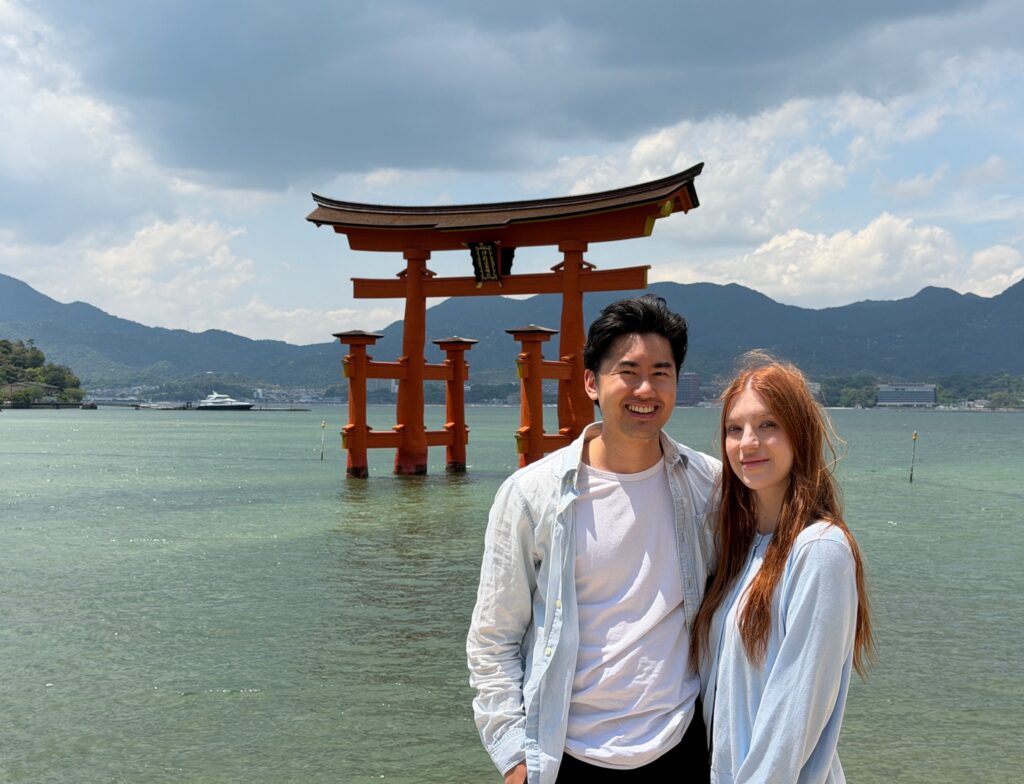
1- Itinerary Highlights. This was my and Luda’s first trip to Japan so we focused on seeing the things you’re “supposed” to see, leaving more off-the-beaten-path destinations for future trips. Over two weeks, we spent, in order: 5 days in Tokyo, 1 day in Kyoto, 2 days hiking portions of the Nakasendo Trail (with a night in a ryokan near Tsumago), 2 more days in Kyoto, 2 days Hiroshima/Miyajima, and ending with 2 days in Osaka. In hindsight, we should have done the Nakasendo Trail before Kyoto (and not sandwiched in-between Kyoto stays) but by the time we realized this was more efficient, it was too late to change our reservations. It was an ambitious itinerary for two weeks and Luda and I often joked we were “grinding it out”, but in the end I am glad we packed so much in. Each place was unique and we generally just enjoyed experiencing the different “vibes” of a place… so it’s difficult to come up with specific recommendations other than sharing we are glad we broke up busy city experiences with quieter places. After consulting with Luda, some top highlights included: (1) staying overnight in a traditional ryokan in Miyajima (Miyajima is an island popular with day-trippers so the night there meant enjoying the island in peace after the last ferry left… great for the “vibe shots”); (2) experiencing the nightlife and energy (and shopping) in and near Dotonbori, Osaka; (3) walking the Arashiyama district in Kyoto near sunset; (4) spending time with Luda’s Japanese exchange friend, Sayo, whose family graciously hosted us in Tokyo for four nights; and (5) experiencing rural Japan by hiking portions of the Nakasendo Trail.

2 – Hiking the Old Nakasendo “Samurai” Trail. This was one of the more unique activities on our itinerary. The Nakasendo Trail is a historic route that once connected Kyoto and Edo (modern-day Tokyo) during Japan’s Edo period, used by samurai, merchants, and travelers moving between “post towns” along the way. Today, must of the old route has been developed but there remains some well-preserved post towns. We hiked one of the best-preserved sections between the traditional villages of Magome and Tsumago, which offered a well-marked forest hike through mountains, cedar groves and small rural settlements that felt largely unchanged by time. We allocated two days in this region, breaking up the hike and staying overnight near Tsumago. We had planned to hike another portion the following day, but it poured overnight and into the morning, and so we opted to return to Kyoto early instead. Even with the abbreviated second day, it ended up being one of the most memorable and distinct parts of the trip and a welcome contrast to the urban busy-ness and intensity of Kyoto during “Golden Week”. This is a easy walk that you can take it slow in – no need to rush this day or be stressed about it being challenging!
3 – Golden Week Travel – Avoid, if possible. Due to certain timing constraints, we had to book travel during the two weeks we did. But before booking this, we didn’t realize that this was also during Japan’s “Golden Week”, a period of four national holidays compressed into one week (in addition to the weekend)! Obviously I don’t regret going, but if possible, I recommend against travelling during Japan this period, for obvious reasons. The train stations and were extremely busy and nauseating and basically everywhere, but particularly the major tourist sites in Kyoto, were more crowded as a result. Fortunately, we were in Tokyo and/or hiking the Nakasendo Trail during part of Golden Week, which helped (in the case of Tokyo, this is because many Tokyoites leave Tokyo). We even arrived to Thousand Tori Gates in Kyoto around 730 AM and it was already noticeably populated.

4 – Japan Travel Can Be Affordable. We spent $6000 CAD for two people for two weeks, which was under our $6500 budget. Another reason I put off travelling to Japan was because of my perception that it is an expensive place to travel. While not as cheap as SE Asia, it is more affordable than I imagined. Luda and I are both frugal people and budgeted what we thought was a lean $6500 for this trip, not confident we would meet it. My friend, Anthony Cho, insisted this was very unlikely to be met. Excluding discretionary shopping costs (which we put off until our last day), we spent $5998.14. We saved money by staying at a friend’s house for four nights, however this is offset slightly by paying a premium for our accommodations because it was Golden Week. Average food spend was about $35-40 each per day (we didn’t “ball out” on any fancy dining experiences this trip, although that is something I would like to do more next time); average accommodation was $110 total per night; and transportation (including airfare) was 58% of our total costs (we did see a lot of places in a short span). On future trips to Japan, when our income is higher, I imagine we would spend more on experiences (for example, fancier dining and accommodation, etc.). On this trip, our most expensive activities were the latest TeamLabs in Kyoto, which was worth every penny and something I highly recommend, and a Traditional Tea Ceremony with kimono rental. The above goes to show you that Japan can be travelled inexpensively. Convenient store food is cheap and yummy, and so many of the popular sites are free or only have a small admission fee!

5 – Eating Alone in Japan is Highly Normalized: Is This Good or Bad? Individual seating is common in restaurant design in Japan, where you’ll often see partitions between seats that create a sense of privacy, similar to study carrels in a university library. One well-known example is Ichiran Ramen, which is famous for its solo dining booths and “serverless” ordering system. Luda thought this was overall a good thing, commenting that she feels less comfortable eating alone at restaurants in Vancouver and this seating arrangement reduces the stigma of being alone. “Ohitori-sama”, the lifestyle of doing things solo, is a concept that is normalized in Japan’s culture that isn’t as present in Western culture. I, on the other hand, think this is a bad thing in the context of Japan’s serious demographic challenges (an aging population and one of the lowest fertility rates globally). If I was the Prime Minister of Japan, I would prohibit these design choice, because the country shouldn’t promote any system that arguably reinforces a major problem.
6 – Completely Redundant Traffic Guides: Respectable Government Policy. Along similar lines as above, is the completely redundant pedestrian traffic guides in Japan. This is not location-specific, but I particularly recall the crosswalk leading up the Golden Pavilion in Kyoto, and there were three automated crosswalk signals showing when to cross and not cross. Despite this, there were three traffic guides physically stationed at each of the three corners, effectively repeating the same instructions as the automated crosswalk signals. This was amusing to see – at that time I was thinking that if this happened in Vancouver, I would be pissed if our taxes funded this. I did more research, and apparently these roles were created by the Japanese government (clearly not for efficiency purposes) but specifically to provide employment and purpose for Japan’s aging population. Looking back, it is true that most of these traffic facilitators were elderly men. This is a respectable policy in my view, because despite being roles that are so unnecessary functionally, it shows the the level of respect and consideration the government places on the elderly’s feeling of dignity and inclusion. But I do wonder if the same purposes can be achieved through creating more useful roles?

7 – Admirable Culture: More Inspiration. One of the things I admired most in Japan was the visible pride people seemed to take in doing their job well, regardless of what that job was. Whether it was a convenience store or McDonald’s cashier saying “Arigato Gozaimsu” with genuine enthusiasm or the guest house host bowing to us while we were leaving, it is clear Japanese culture includes a seriousness towards being responsible and considerate. This is part of what creates “repeat customers”, why everyone feels comfortable here, and an underrated part of what contributes to Japan’s soft power.
8 – Japan: Great Travel Destination. But Great for Living? It is one thing to conclude a country is a fun place to travel to, but another thing to conclude it would be a good place to live. Writing this blog back in Vancouver, while showing a visitor (Luda’s niece) around, I can’t help but feel Vancouver is a far less exciting travel destination than Japan, but perhaps an easier and more balanced place to build a long-term life. Japan impressed me deeply as a traveller, yet I also sensed the orderliness, chaos, sensory overload, apparent social expectations and constant busyness (at least in the big cities and among other things) may not translate into the kind of lifestyle I would want permanently. Of course, my perspective of Japan is limited by the places I’ve visited.

9 – Gripes – Arguably insignificant but I still have some! I have been praising Japan a lot, but I do have some gripes, albeit insignificant. First, both Luda and I had digestion issues, and based on scrolling through Instagram Reels, it seems that this is a common issue. I didn’t poop for my first four days (and for Luda, more) and after that, it was inconsistent. We even tried a viral drink featuring some products from 7/11, which was unsuccessful. This was surprising to me because I usually don’t have this issue, but from what I understand, this is often linked to a particularly lower-fibre diet, so it’s something worth being mindful of and proactively counteracting with the right foods. Second, while I’ve already praised efficiency overall, I find the crosswalk timing to be too long – the wait time seems unnecessarily long at intersections. The lack of significant gripes is telling! Also, the first gripe is not even Japan’s fault.
10 – Japanese Toilets – Will we see more of these in Canada eventually? I doubt it. The first photo I took in Japan was the toilet at Tokyo’s Narita International Airport, and specifically I was fascinated by the volume button, that adjusts the audio that you can play to mask “bathroom sounds”. This is just another example of how thoughtfulness and consideration is engrained in Japanese society. Throughout the trip, Luda and I pointed out aspects from Japan that we should or could adopt back in Canada (e.g., Japanese landscaping) and a Japanese-style toilet was in the conversation. I initially was thinking Canada is way behind on their toilet game, but I realized I never once actually touched one of the special buttons on the toilets. I appreciated how the toilet seats were naturally warm and at some places, the toilet recognizes when you enter the room and lifts the toilet lid (and closes when you leave), however I’m not sure if that is something that is a difference maker for many.
11 – Hosting – Inspiration. As I mentioned, we consider ourselves lucky to have had Luda’s exchange friend, Sayo, host us while we were in Tokyo. What inspiring, wonderful hosts – we were blessed to be welcomed by amazing home cooked food and dining experiences which included among other items, temaki sushi and DIY Takoyaki. I would like to host people as graciously as they did in the future and this provided an opportunity to learn more about Japanese culture in a way that is more difficult to do otherwise. Did you know in Japanese homes, the bath is always by a shower and are separate, Onitsuka Tigers (a shoe brand that is ultra popular among tourists) are not that popular among the Japanese, and larger dogs are uncommon in Japan, compared to what you might see in Canada.
12 – My Search for a Watch. I’ve been rocking a Garmin Fenix 7 smartwatch for a while now and as someone in corporate law, I do feel, sometimes, that I have to up my style game. I would like to. I was initially intrigued by watches from Kuoe, a Kyoto-based microbrand that offers customizable piece in the $500-$1000 CAD price range, but did not like what I saw at the Kyoto store. I loved the Grand Seiko (priced $7-11K CAD) I tried on in the SEIKO House in Ginza, Tokyo and was very tempted to buy it, but told myself I would have to hit one more financial and life goal before rewarding myself with this purchase. Next time, perhaps!
13 – Kyoto, Oppenheimer, and Hiroshima. Hiroshima is famous, of course, for being the location where the US dropped the first nuclear bomb at the end of WW2. Prior to going, I listened to a history podcast surrounding the nuking of Hiroshima and found it interesting that in deciding whicy Japanese city to nuke, Kyoto was removed not only because of it’s cultural significance but also because the US Secretary of War had a strong personal attachment to Kyoto where he spent his honeymoon. In contrast, Hiroshima was selected for its military and logistics significance that hadn’t already been heavily damaged. Not much more to add here – just found that interesting.
Japan Image Gallery


Awesome read, I really enjoyed it, very thoughtful observations. Looking forward to your next blog entries!